Graphical abstract templates for materials, energy and biology
55 editable graphical abstract templates with live 3D models: solar cells, batteries, catalysis, memory and spintronics, quantum and 2D materials, shape-memory alloys, metamaterials, structural colour and bioinspired surfaces, each quoting its papers.
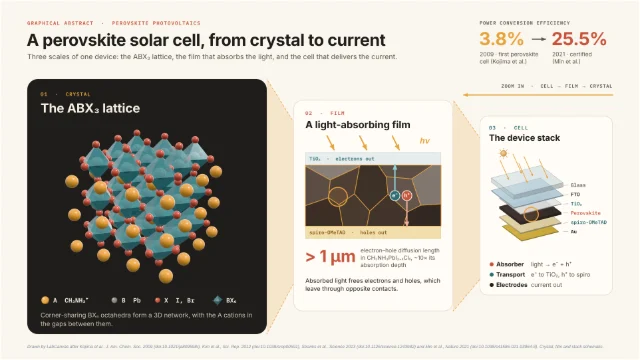 Perovskite solar cell: from crystal to device
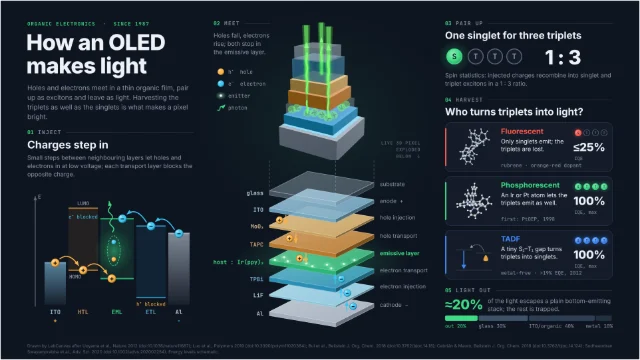 How an OLED makes light
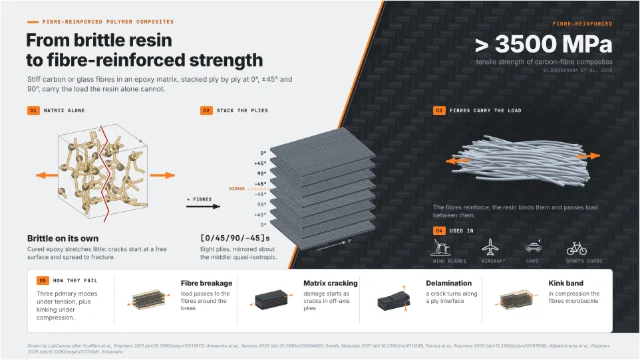 Fibre-reinforced composites: from layup to strength
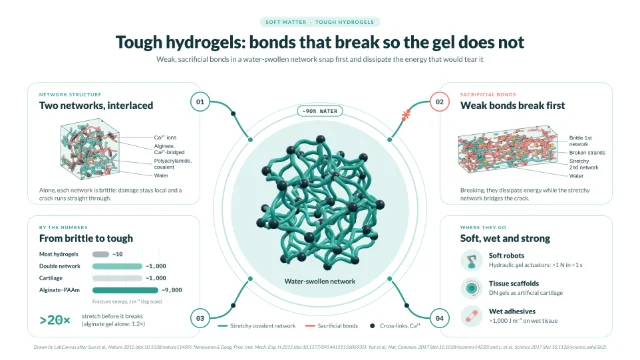 Tough hydrogels: sacrificial bonds that break so the gel does not
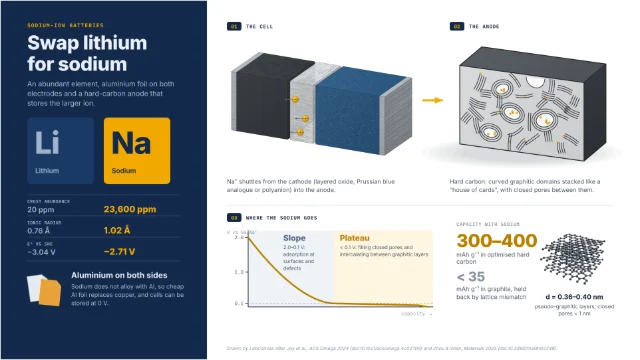 Sodium-ion batteries: abundant sodium, stored in hard carbon
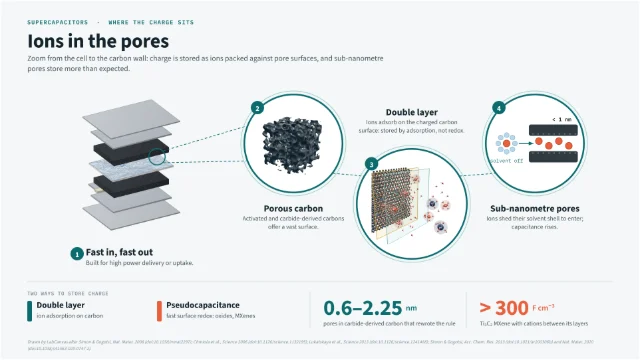 Supercapacitor electrodes: zooming in on ions in carbon pores
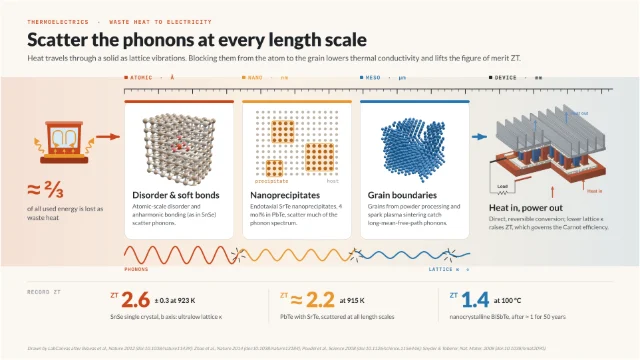 Thermoelectrics: scattering heat-carrying phonons at every length scale
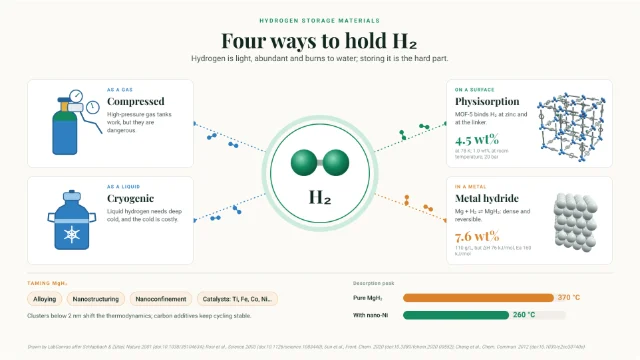 Hydrogen storage materials: four ways to hold H₂
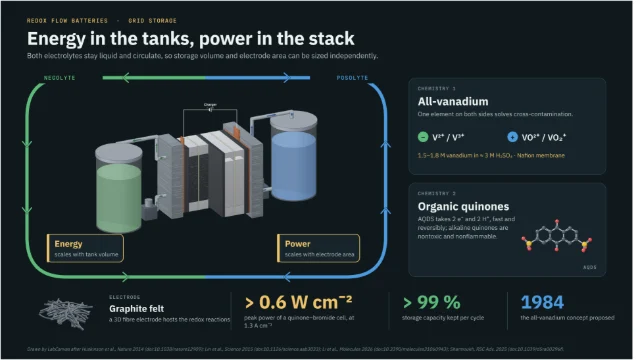 Redox flow batteries: energy in the tanks, power in the stack
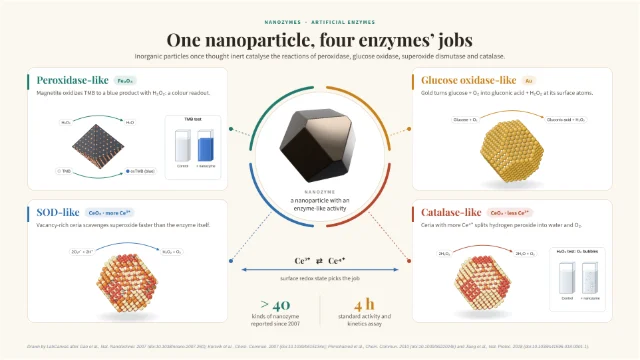 Nanozymes: nanoparticles that act like enzymes
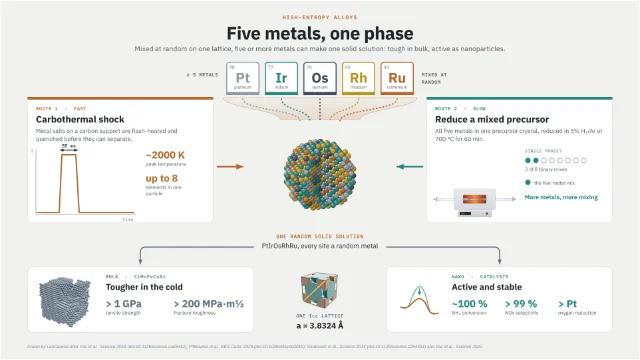 High-entropy alloys: five metals, one phase+44more templates in this collectionSign up free to see all
Questions
What templates are there for graphical abstracts?
55: Perovskite solar cell: from crystal to device; How an OLED makes light; Fibre-reinforced composites: from layup to strength; Tough hydrogels: sacrificial bonds that break so the gel does not; Sodium-ion batteries: abundant sodium, stored in hard carbon; Supercapacitor electrodes: zooming in on ions in carbon pores; Thermoelectrics: scattering heat-carrying phonons at every length scale; Hydrogen storage materials: four ways to hold H₂; Redox flow batteries: energy in the tanks, power in the stack; Nanozymes: nanoparticles that act like enzymes; High-entropy alloys: five metals, one phase; Self-healing polymers: four ways to close a crack; Monolayer MoS₂: from one atomic layer to logic; Daytime radiative cooling: cooling under the sun with the cold of space; Silica aerogel: from sol to superinsulator; Shape-selective catalysis in zeolites: from pellet to pore window; Liquid crystals: order between solid and liquid; Crystal defects that shape materials; Memristors for brain-inspired computing: the synapse and its electronic twin; Triboelectric nanogenerators: turning everyday motion into electricity; Organic solar cells: non-fullerene acceptors climb past the fullerene ceiling; Solid oxide cells: one ceramic cell, run as a fuel cell or an electrolyzer; Aqueous zinc-ion batteries: taming the zinc anode, from electrolyte to cathode; Photocatalyst sheets: from one SrTiO₃ particle to a 100 m² hydrogen farm; Making ammonia: Haber–Bosch on iron versus lithium-mediated electrosynthesis; Phase-change memory: writing bits as glass or crystal; Two-dimensional magnets: magnetism, one layer at a time; Topological insulators: insulating inside, conducting at the edge; Ferroelectric hafnium oxide: a polar phase in a chip dielectric; MRAM: a bit stored in the spins of a tunnel junction; Shape-memory alloys: NiTi switches between austenite and martensite; Mechanical metamaterials: properties from geometry, not chemistry; Structural colour: photonic crystals colour without dyes; Transparent wood: take out the lignin, fill in a matching polymer; Superhydrophobic surfaces: the lotus effect, read on a protractor; Direct lithium extraction: picking Li⁺ out of brine; Breaking forever chemicals: four ways to cleave the C–F bond; Enzymatic PET recycling: the right enzyme at the right temperature; Electrochromic smart windows: glass that tints on demand; Low-carbon cement: less clinker, and CO₂ back into the concrete; How the zebrafish heart rebuilds itself; The Drosophila circadian clock; Bacteriophages against biofilms; CRISPR diagnostics: find a sequence, light a signal; Cell-free protein synthesis: DNA in, protein out; Hydrogen embrittlement of steels: trap the hydrogen before it finds the crack; Chemically strengthened glass: a log of the ion-exchanged surface; Bulk metallic glasses: outrun the crystal; Electronic skin: soft sensors that stretch, press and feel; Lead-free piezoceramics: a family tree that grows d₃₃; Quantum sensing with NV centres: one defect in diamond, read by light; Upconversion nanoparticles: two infrared photons in, one visible photon out; Molecular solar thermal storage: sunlight kept as strain, released as heat; Gallium liquid metals: a metal you can pour, print and stretch; Atomic layer deposition: building a film one layer per cycle.
Which papers are these templates based on?
Together they follow 317 published papers; each template’s page lists its own, with DOIs, and the figure credit names them too.
How do I use one of these templates?
Open its page and click Open in the editor. Sign in, or create an account, and it opens in the LabCanvas figure editor as your own design, with every layer editable.
Make it your own figure
Start from a template and change anything: the text, the colours, the structures.
Create an account Sign in